Hydraulic Shearing Machine: Common Problems, Causes and Solutions
Introduction: Why Troubleshooting Knowledge Matters for Shearing Machine Operators
A hydraulic shearing machine is one of the most productive and reliable machine tools in any sheet metal fabrication workshop. Whether you are running a Hydraulic Swing Beam Shearing machine for thin gauge sheet work or a Hydraulic Guillotine Shearing machine for heavier plate, these machines are built to deliver accurate, consistent cuts at high production rates for many years when correctly operated and maintained.
But even well-built machines develop problems over time. A shearing machine that produces uneven cuts, loses hydraulic pressure, runs slowly, or develops oil leaks creates immediate production problems and, if left unaddressed, can cause more serious and expensive damage. The difference between a minor adjustment and a major repair is often how quickly the problem is identified and correctly diagnosed.
This article covers the ten most common problems encountered with hydraulic shearing machines — including the Hydraulic Swing Beam Shearing machine, the Hydraulic Guillotine Shearing machine, and the CNC Guillotine Shearing machine — their most likely causes, and the practical solutions that restore the machine to correct operation.
Understanding Your Hydraulic Shearing Machine
How a Hydraulic Shearing Machine Works
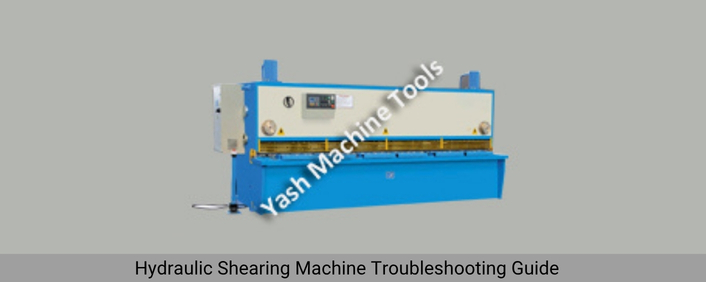
A hydraulic shearing machine cuts sheet metal by moving an upper blade past a fixed lower blade with a controlled gap and rake angle between them. In a Hydraulic Guillotine Shearing machine, the upper blade descends vertically in a straight line. In a Hydraulic Swing Beam Shearing machine, the upper blade pivots on a fulcrum at the rear of the machine, creating an arc movement that produces a rolling shear action with reduced distortion on thin materials.
The hydraulic system provides the force to drive the blade downward through the material. A hydraulic pump draws oil from the reservoir and delivers it under pressure to the hydraulic cylinders that move the blade holder. Valves control the direction, speed, and pressure of the oil flow. The back gauge positions the sheet to the correct cut length. The blade gap and rake angle settings determine cut quality and blade life.
Key Components to Monitor
The components most frequently involved in hydraulic shearing machine problems are the hydraulic pump, pressure relief valves, directional control valves, hydraulic cylinders and seals, the blade gap adjustment mechanism, the back gauge drive, the hold-down system, and the upper and lower blades themselves. Understanding which component is likely responsible for a given symptom makes diagnosis faster and repair more targeted.
Problem 1: Uneven or Angled Cuts
Symptoms
The cut sheet comes out with one end longer than the other, or the cut edge is not straight along its length despite the back gauge being set correctly.
Causes
Uneven cuts are most commonly caused by unequal hydraulic pressure on the two cylinders that drive the blade holder. If one cylinder receives more pressure than the other, the blade descends unevenly and produces an angled cut. This can also be caused by worn or bent guide rails that allow the blade holder to tilt during descent, or by a blade that is worn more on one side than the other.
Solutions
Check the hydraulic pressure at both cylinders using a pressure gauge tapped into each circuit. If pressures differ, inspect the pressure relief valve and flow control valves serving each cylinder. Check the blade holder guide rails for wear or damage and verify that the gibs on the guide rails are adjusted evenly on both sides. Inspect the upper blade for uneven edge wear and regrind or replace if necessary.
Read Our Article
All Geared Lathe Machine Price Factors: What Actually Increases CostProblem 2: Blade Wear and Poor Cut Quality
Symptoms
The cut edge shows excessive burr, the material deforms or rolls over at the cut line, or the machine requires noticeably more force to complete cuts that previously required less.
Causes
Blade wear is the most common cause of poor cut quality on hydraulic shearing machines. The upper and lower blades have four usable cutting edges each — when one edge becomes dull, the blade is indexed to present a fresh edge. If all four edges are worn or if the blade gap is set incorrectly for the material being cut, cut quality deteriorates rapidly. An incorrect blade gap — too tight or too loose for the material thickness and tensile strength — is a major contributor to premature blade wear and poor edge quality.
Solutions
Check the blade gap setting against the specification for the material being cut. The correct blade gap for mild steel is typically 5 to 8 percent of the material thickness. For stainless steel and harder materials, a slightly larger gap of 8 to 10 percent is often appropriate. Index the blades to a fresh cutting edge if available, or send them for regrinding. When all four edges of a blade set are worn, replace the blades as a matched set — mixing worn and new blades in the same machine produces uneven cut quality.
Problem 3: Hydraulic Pressure Loss
Symptoms
The machine completes its cutting stroke more slowly than normal, fails to cut through the full material thickness, or the pressure gauge shows a reading below the normal operating pressure.
Causes
Hydraulic pressure loss is caused by internal leakage within the hydraulic system. The most common sources are a worn hydraulic pump that can no longer build full pressure, a pressure relief valve that has been set too low or is stuck open, worn seals in the hydraulic cylinders allowing oil to bypass from the high-pressure to the low-pressure side, or a blocked oil filter starving the pump of flow.
Solutions
Check the hydraulic oil filter first — a blocked filter is the simplest and cheapest cause of pressure loss to fix. Replace the filter element and recheck pressure. If pressure is still low, check the relief valve setting against the machine specification and adjust if necessary. Test the pump output pressure with no load to establish whether the pump itself is worn. Inspect the cylinder seals by observing whether the blade holder drifts downward slowly when the machine is stationary under load — drift indicates bypassing seals that require replacement.
Our Other Product
SPM / Heavy MachineProblem 4: Hydraulic Oil Leakage
Symptoms
Oil is visible on the machine frame, floor, or cylinder bodies. The oil reservoir level drops between maintenance intervals without a clear external cause.
Causes
Oil leakage from a hydraulic shearing machine occurs at seals and fittings throughout the hydraulic circuit. The most common leak points are the cylinder rod seals (where the cylinder rod exits the cylinder body), pipe fittings and hydraulic hose connections that have vibrated loose over time, the pump shaft seal, and the control valve body seals. Using incorrect hydraulic oil that is incompatible with the seal materials accelerates seal degradation and increases leak frequency.
Solutions
Clean the machine thoroughly and dry all surfaces before attempting to locate a leak. Run the machine through several cycles and observe where oil first appears. Tighten any loose fittings — do not overtighten hydraulic fittings as this damages the seating and worsens the leak. Replace cylinder rod seals when they are the source of leakage — this requires the cylinder to be removed and disassembled. Confirm that the hydraulic oil in the machine matches the grade and specification in the machine manual. Using the correct oil grade prevents premature seal degradation.
Problem 5: Back Gauge Inaccuracy
Symptoms
Cut lengths are inconsistent even when the back gauge position has not been changed, or the measured cut length differs from the programmed back gauge dimension.
Causes
Back gauge inaccuracy on hydraulic shearing machines is caused by mechanical wear in the back gauge drive system, backlash in the lead screw or rack and pinion mechanism, or on CNC Guillotine Shearing machines, a loss of position in the servo drive or encoder. Physical damage to the back gauge stops from heavy sheet impact is also a common cause. On machines with NC or CNC back gauge control, drift in the position feedback system over time causes the programmed position to gradually diverge from the actual physical position.
Solutions
Check the back gauge drive mechanism for visible wear or damage. On manual back gauge machines, check lead screw backlash and adjust or replace if excessive. On CNC Guillotine Shearing machines, perform the back gauge home position calibration procedure described in the machine manual, and check the encoder feedback against a physical measurement of back gauge position at multiple points across the travel range. Replace damaged back gauge stops. Check that the back gauge mounting is secure and has not shifted due to repeated impact from heavy plate.
Problem 6: Slow Cutting Cycle
Symptoms
The time for each cutting cycle is noticeably longer than when the machine was new, reducing production output.
Causes
Slow cycle time on a hydraulic shearing machine is most commonly caused by low hydraulic oil temperature reducing the oil’s flow characteristics, a worn pump that can no longer deliver oil at the rated flow rate, a blocked oil filter restricting flow to the pump, or incorrectly set speed control valves slowing the cylinder movement. Low ambient temperature at machine startup causes temporary slowness that resolves as the oil warms to operating temperature — this is normal behaviour and not a fault.
Solutions
Allow the machine to warm up for five to ten minutes at the start of each shift in cold conditions before running production work. Check the oil filter condition and replace if the filter differential pressure indicator shows it is approaching blockage. Check pump output flow rate against specification. Inspect and clean the speed control valves if cycle time has degraded progressively rather than suddenly. On machines with adjustable rapid return speed, verify the return stroke speed setting has not been inadvertently reduced.
Problem 7: Material Slippage During Cutting
Symptoms
The sheet moves during the cutting stroke, producing a cut that is not perpendicular to the sheet edge, or the cut length varies because the sheet shifts before or during the blade descent.
Causes
Material slippage is caused by insufficient clamping force from the hold-down system, worn or damaged hold-down rubber pads that have lost their grip, or a hold-down system that is not applying clamping force early enough in the blade descent cycle to secure the sheet before cutting begins. It can also be caused by the operator feeding the sheet against the back gauge with excessive force that compresses the hold-down pads beyond their range and then rebounds when force is released.
Solutions
Check the hold-down system pressure setting and increase if it is below the minimum specification. Inspect the hold-down rubber pads for wear, hardening, or damage and replace if necessary. Adjust the hold-down timing if the machine provides this adjustment, to ensure clamping occurs before the blade contacts the material. Train operators to feed sheet against the back gauge smoothly without slamming it, and to confirm the sheet is seated correctly against the back gauge before initiating the cut.
Problem 8: Excessive Noise During Operation
Symptoms
The machine produces knocking, banging, or grinding noises that were not present previously, either during the cutting stroke, the return stroke, or both.
Causes
Abnormal noise from a hydraulic shearing machine usually indicates either a mechanical problem or a hydraulic system issue. Knocking at the end of the cutting stroke typically indicates the blade holder is reaching the end of its stroke too fast and impacting the mechanical stops — often caused by incorrect deceleration valve settings or worn shock absorbers. Grinding noise from the hydraulic pump indicates pump wear or cavitation from a low oil level or a blocked suction filter. Metallic knocking from the blade area often indicates loose blade fasteners or blade contact with the lower blade due to incorrect gap setting.
Solutions
Check the oil level in the hydraulic reservoir and top up if low. Replace the suction filter if blocked. Check all blade fastener torques and tighten to specification. Verify the blade gap setting is correct. Inspect the deceleration valves and shock absorbers at the end of the cutting stroke and replace if worn. Have the hydraulic pump inspected if pump noise persists after the oil level and filter checks.
Our Other Product
Turrent Milling Machine MachinesProblem 9: Overheating of Hydraulic Oil
Symptoms
The hydraulic oil temperature exceeds the normal operating range (typically 40 to 60 degrees Celsius), the oil smells burnt, or the machine cuts more slowly as it warms up rather than remaining consistent throughout the shift.
Causes
Hydraulic oil overheating in a shearing machine is caused by excessive internal leakage in the hydraulic system converting pressure energy to heat rather than useful work, a pressure relief valve that is set too high and constantly bypassing oil at high pressure, a clogged oil cooler reducing heat dissipation, or running the machine at very high cycle rates without adequate cooling capacity for the duty cycle.
Solutions
Check the oil cooler (air-cooled or water-cooled depending on machine specification) for blockages and clean if necessary. Check the relief valve setting and reduce if above specification. Test for internal leakage in the system by checking whether the blade holder drifts under load — significant drift indicates bypassing seals generating heat. Review the machine’s rated duty cycle and confirm the production rate is within specification. In high-ambient-temperature environments, an auxiliary oil cooler may be required to maintain oil temperature within the acceptable range.
 Call Now!
Problem 10: Electrical Faults and Control System Issues
Symptoms
The machine fails to start, stops unexpectedly during operation, produces error codes on the control panel, or the back gauge on CNC Guillotine Shearing machines behaves erratically.
Causes
Electrical faults on hydraulic shearing machines are commonly caused by loose electrical connections that vibrate loose during machine operation, swarf or coolant contamination of the electrical cabinet causing short circuits or corrosion, worn or faulty proximity switches used for position sensing of the blade holder and back gauge, or overload protection devices tripping due to a hydraulic or mechanical fault that causes the motor to draw excessive current.
Solutions
Check all main electrical connections for security and signs of corrosion or heat damage. Clean the electrical cabinet of any swarf or moisture contamination. Test all proximity switches for correct operation using the machine diagnostic mode if available, or by manually triggering them with a metal object and confirming the indicator lamp response. Reset any tripped overload devices only after identifying and correcting the underlying cause — repeated tripping without investigating the root cause will damage the motor. On CNC Guillotine Shearing machines, consult the machine error code list in the manual before attempting any remedial action.
Frequently Asked Questions About Hydraulic Shearing Machine Maintenance
How often should hydraulic oil be changed in a shearing machine?
Hydraulic oil in a shearing machine should typically be changed every 2,000 operating hours or every twelve months, whichever comes first. In dusty or high-temperature environments, change intervals should be shorter. Always drain the reservoir completely, clean the tank interior, and replace the filter element when changing hydraulic oil. Use the grade of oil specified in the machine manual.
What is the correct blade gap setting for a hydraulic shearing machine?
The correct blade gap depends on the material being cut. For mild steel, the gap is typically 5 to 8 percent of the material thickness. For stainless steel and harder materials, 8 to 10 percent is often appropriate. The machine manual provides the specific gap table for the machine's rated capacity range. Incorrect blade gap is the most common cause of excessive blade wear and poor cut edge quality.
Why does my hydraulic shearing machine cut sheet metal with excessive burr?
Excessive burr on cut edges is usually caused by worn blades, incorrect blade gap, or both. Check the blade gap setting first as it is the quickest adjustment. If correcting the gap does not resolve the burr problem, inspect the blade cutting edges and index to a fresh edge or regrind the blades. Blade edges that have been run beyond their useful life cannot produce clean cuts regardless of gap setting.
What causes a hydraulic swing beam shearing machine to cut unevenly?
Uneven cuts from a Hydraulic Swing Beam Shearing machine are most commonly caused by unequal cylinder pressures, worn pivot bearings on the swing beam, or uneven gib adjustment on the blade holder guides. Check hydraulic pressures at both cylinders first. Inspect the swing beam pivot bearings for wear, which allows the beam to flex laterally during cutting and produces a wavering cut line.
How do I check if my hydraulic pump needs replacement?
Connect a pressure gauge to the pump outlet and measure the maximum pressure the pump can build with all flow blocked (deadhead pressure). If the measured pressure is significantly below the machine's specified maximum operating pressure, the pump is worn and should be replaced or rebuilt. Also measure the pump flow rate at rated speed — a significant reduction in flow relative to specification confirms pump wear. These tests should be performed by a qualified hydraulic technician.
Can I use any hydraulic oil in my shearing machine?
No. Always use the specific grade and type of hydraulic oil recommended in the machine manual. Using the wrong grade can cause premature seal wear, inadequate lubrication of the pump and valves, foaming, and overheating. Common grades used in industrial shearing machines are ISO VG 46 or ISO VG 68 anti-wear hydraulic oil, but confirm the specification for your specific machine before topping up or changing.
Conclusion
The ten problems covered in this article — uneven cuts, blade wear, pressure loss, oil leakage, back gauge inaccuracy, slow cycle time, material slippage, excessive noise, overheating, and electrical faults — account for the great majority of issues encountered with hydraulic shearing machines in day-to-day production.
Most of these problems can be resolved quickly when they are diagnosed correctly. The key is to match the symptom to the most likely cause systematically rather than attempting repairs at random. For the Hydraulic Swing Beam Shearing machine, the Hydraulic Guillotine Shearing machine, and the CNC Guillotine Shearing machine, the machine manual is always the first reference — it contains the machine-specific pressure settings, gap tables, lubrication specifications, and error code lists that make diagnosis accurate and efficient.
When problems exceed the workshop’s own diagnostic capability, engaging a qualified hydraulic or machine tool service engineer early prevents a minor fault from becoming a major and expensive repair.

Mr. Yash Shah brings extensive knowledge of workshop machinery and precision engineering to his writing, drawing on years of hands-on exposure to the machine tools industry. He writes on a broad spectrum of equipment, including Lathe Machines, Radial Drilling Machines, Milling Machines, CNC Machines, Grinding Machines, Boring Machines, Planing Machines, and other workshop machinery essential to modern manufacturing. His articles focus on practical applications, machine selection, and the role these tools play in improving shop-floor efficiency and production quality. Mr. Shah is associated with Yash Machine Tools, a trusted name in the manufacturing and supply of workshop machinery, known for delivering reliable, industry-grade solutions to clients across India and abroad.
Summarize with AI:




Listen Article:
- How to Maintain a Lathe Machine: Daily, Weekly and Monthly Checklist
- Heavy-Duty Lathe vs. Medium-Duty Lathe: Which One Does Your Manufacturing Unit Need?
- How CNC Press Brake Machines Are Used in HVAC, Automotive and Electrical Cabinet Manufacturing
- Planing Machines and CNC Cutting Machines: Types, Features and Industrial Applications
- Welding Machines: Types, Applications and How to Choose the Right Welder for Your Workshop