


Operating All Geared Radial Drilling Machines: Troubleshooting Common Issues & Safety Protocols
All Geared Radial Drilling Machines: Troubleshooting Problems & Safety Regulations
All geared radial drilling machines are precision-engineered tools widely used in metal fabrication, heavy engineering workshops and production facilities for drilling, boring, tapping and reaming operations. When these machines develop operational faults or are used without following defined safety protocols, productivity drops and workplace accidents become a real risk. This article addresses the most critical troubleshooting scenarios and safety measures that every operator and maintenance technician must know.
All Geared Radial Drilling Machines: Understanding Operating Faults before Troubleshooting
Before jumping into fixes, it is important to identify fault patterns in all geared radial drilling machines. Common symptoms include excessive vibration during drilling, spindle overheating, unexpected feed rate inconsistencies, gear engagement failures and unusual mechanical noise during operation. These symptoms typically point toward specific mechanical or electrical root causes – not random failures. Accurate symptom recognition reduces mean time to repair and prevents recurring breakdowns.
 Request a Call Now!
All Geared Radial Drills: Diagnosing Spindle and Gear Train Problems
All geared radial drills rely on a multi-speed gearbox to deliver torque across a wide RPM range. When the spindle fails to reach the selected speed or produces grinding sounds, the most frequent causes are worn or chipped gear teeth, insufficient gearbox lubrication or improper gear engagement due to a worn shifting fork. Check the gear oil level first – low viscosity or degraded oil is responsible for a large percentage of gear train failures. Replace oil per the OEM-specified grade and interval. If noise persists, inspect the gear train visually after isolating the machine from the power supply and disassembling the headstock cover.
Radial Drill Machine: Fixing Spindle Feed and Depth Stop Malfunctions
A radial drill machine frequently encounters issues with the automatic feed mechanism and depth stop. If the spindle feed disengages prematurely or does not engage at all, inspect the feed clutch assembly for wear. A slipping or seized clutch is often caused by metal debris contamination or spring fatigue. The depth stop micrometer collar should be checked for play – excessive backlash in the collar mechanism leads to inaccurate hole depths, which is particularly problematic in precision boring or multi-pass drilling operations. Clean, inspect and if necessary replace the feed worm gear to restore consistent feed rates.
All Geared Radial Drilling: Addressing Arm Clamping and Column Rotation Issues
A loose or improperly clamped radial arm introduces chatter and runout in the drilled hole. All geared radial drilling operations depend heavily on the structural rigidity of the arm clamping system. If the arm does not lock firmly despite applying the clamping lever, check the clamping sleeve and the column surface for wear, scoring or contamination with coolant residue and metal chips. Worn clamping sleeves must be replaced rather than shimmed. Column rotation stiffness, on the other hand, often results from insufficient lubrication on the column rack and pinion assembly – apply the correct grade of grease and inspect the column bearing races for pitting or corrosion.
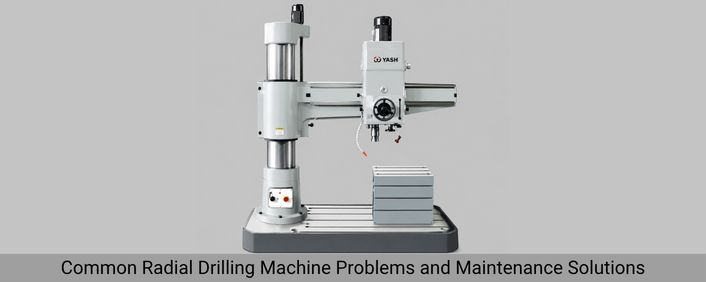
All Geared Radial Drill: Resolving Electrical and Motor-Related Faults
An all geared radial drill may develop electrical faults that manifest as intermittent starting, motor overheating or failure to reverse spindle direction. Overloading the motor beyond its rated capacity during deep-hole drilling in hard materials is the most common cause of thermal overload trips. After resetting the overload relay, verify the drill bit condition – a dull or incorrectly ground drill increases cutting resistance sharply and can repeatedly trip the motor protection circuit. Check for loose terminal connections in the control panel, which can cause voltage drops that affect motor performance. For three-phase models, confirm phase balance and inspect contactors for pitting or carbon buildup.
Radial Drilling Machine: Correcting Coolant System Failures
In continuous production environments, a radial drilling machine’s coolant system plays a critical role in tool life and surface finish quality. Blocked coolant nozzles, air locks in the pump line or low coolant reservoir levels are the most frequent issues. Flush the coolant lines and clean the sump filter regularly to prevent chip contamination from clogging the pump impeller. If the coolant pump motor runs but output is minimal, inspect the impeller for wear or reverse rotation – incorrect phase wiring can cause the coolant pump to run backwards. Use water-soluble cutting fluids appropriate for the material being drilled to optimise chip evacuation and reduce heat buildup.
All Geared Radial Drilling Machines: Essential Pre-Operation Safety Protocols
All geared radial drilling machines must be operated following a structured safety checklist before every shift. Verify that the workpiece is securely clamped using a machine vice or T-bolts on the worktable – never hold a workpiece by hand during drilling. Confirm that the drill chuck is properly tightened and the chuck key removed before starting the spindle. Inspect the drill bit for cracks, chipping or incorrect point geometry before mounting. Check that all guards and safety covers are in place and that the emergency stop is functional. Operators must wear safety glasses, close-fitting clothing and avoid gloves when operating rotating spindles, as loose material can get caught in the chuck.
All Geared Radial Drills: Safe Speed and Feed Selection Practices
Selecting incorrect cutting speeds and feed rates is one of the leading causes of both tooling failures and operational accidents on all geared radial drills. Always refer to the cutting speed chart provided in the machine manual or use standard machinist reference tables based on material type, drill bit diameter and bit material (HSS vs carbide). Running at excessive RPM on large-diameter drills generates dangerous heat and can cause drill bit breakage. Conversely, too slow a feed rate with high spindle speeds increases work hardening in stainless steel and heat-resistant alloys. Use the machine’s tachometer or speed indicator to verify the selected gear range before starting the cut.
Radial Drill Machine: Lockout/Tagout and Maintenance Safety Procedures
Performing maintenance or tooling changes on a radial drill machine without following lockout/tagout (LOTO) procedures is a critical safety violation. Before any inspection, lubrication or repair task, isolate the machine from the main power supply, apply an energy isolation lock and tag the control panel. Verify zero energy state by attempting to start the machine. All geared radial drilling machines store residual mechanical energy in the arm and spindle assemblies – always lower the radial arm to its travel stop before locking out to prevent unexpected arm descent. Scheduled preventive maintenance intervals for gearbox oil changes, bearing inspections and electrical connection checks should be documented in a machine logbook.
Conclusion
Effective troubleshooting and strict adherence to safety protocols are what define reliable, long-term performance from all geared radial drilling machines. Addressing mechanical faults promptly, maintaining proper lubrication schedules and training operators on correct speed-feed selection and LOTO procedures significantly reduces downtime and workplace injury risk. A well-maintained radial drilling machine, operated safely, consistently delivers precision, efficiency and productivity across heavy engineering and metal fabrication applications.
- How to Choose the Right CNC Lathe Machine for Your Shop?
- Why CNC Press Brake Machines Are a Game-Changer for Modern Manufacturing?
- Turret Milling Machines in the Automobile Industry: Key Use Cases
- Hydraulic Press Upgrades for 2026: How Rigid Frames & Accurate Hydraulics Reduce Waste in Sheet Metal Shaping
- All Geared Lathe Machine Price Factors: What Actually Increases Cost


