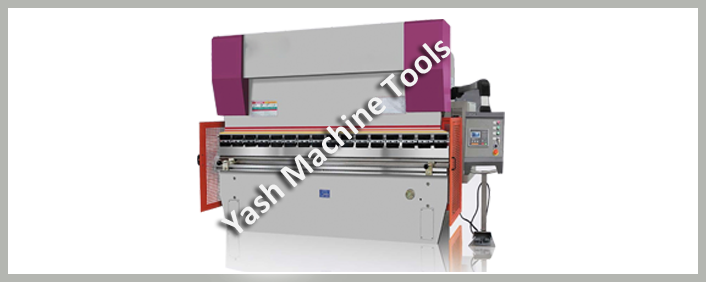
Why CNC Press Brake Machines Are a Game-Changer for Modern Manufacturing?
The manufacturing industry is continually evolving and one of the most significant technological advancements that has had a profound impact on this sector is the CNC press brake machine. Modern CNC press brakes have revolutionized the way metalworking and fabrication industries approach bending and shaping metal sheets. With improved precision, flexibility and automation, these machines have made processes faster, more efficient and more reliable. In this article, we will explore why CNC press brake machines are a game-changer for modern manufacturing, delving into their features, capabilities and the key factors that make them essential in today’s manufacturing landscape.
CNC Press Brake Machine: Redefining the Bending Process
The CNC press brake machine has quickly become an indispensable tool in the metal fabrication industry. Unlike traditional manual press brakes, CNC press brakes are automated systems that allow for highly precise bending of metal sheets into complex shapes and designs. The CNC (Computer Numerical Control) system ensures that every bend is made with utmost accuracy, reducing errors that would otherwise require costly rework.
By utilizing CNC technology, these machines offer automated control of various parameters like bending angle, position and force. This flexibility enables manufacturers to handle a wide range of materials, thicknesses and bend types. Whether it’s a small batch production or large-scale runs, the CNC press brake provides exceptional flexibility and consistency, making it an ideal choice for industries like aerospace, automotive and construction.
CNC Brake Press Machine: Enhancing Productivity and Efficiency
One of the primary reasons CNC brake press machines have gained popularity is their ability to improve productivity. By automating the bending process, these machines allow operators to focus on other aspects of production, enhancing overall efficiency. The integration of CNC systems allows for faster setup times, quicker adjustments and the ability to produce complex parts with minimal manual intervention.
The accuracy of a CNC press brake also means that parts can be produced with tighter tolerances, reducing the need for post-production modifications or quality control interventions. This directly contributes to lowering production costs and minimizing material wastage, both of which are critical factors in competitive industries.
CNC Press Brake Machine Features: Advanced Capabilities for Modern Demands
The CNC press brake machine features are a significant factor in its adoption across industries. With features like backgauge systems, automatic tool changers and programmable control interfaces, these machines are designed to handle a variety of tasks and complex designs with ease.
- Automated Backgauge Systems: These systems automatically adjust to the required position, ensuring accurate alignment of materials. This is particularly important for repetitive tasks where precise measurements are crucial.
- Multiple Axes Control: Advanced CNC press brakes operate on multiple axes, giving them the ability to handle complex geometries and intricate bending patterns.
- User-Friendly Interfaces: Most modern CNC press brake machines come with intuitive software that allows operators to easily input the required parameters for production runs, reducing the learning curve and improving workflow efficiency.
- Tooling Flexibility: Many CNC press brake models allow for quick changes of tooling to handle different materials and thicknesses without long delays, offering increased versatility and adaptability in production lines.
Best CNC Press Brake Machine: Selecting the Right Machine for Your Needs
Choosing the best CNC press brake machine depends on several factors, including production volume, material types and specific application requirements. While there are many manufacturers of CNC press brakes, selecting the right one requires considering certain aspects like machine capacity, bend length and overall durability.
For example, industries that require high-precision bending for aerospace or automotive applications may opt for a machine with advanced multi-axis control and robust software for complex geometries. On the other hand, companies in industries with less demanding specifications may prioritize machines that offer a good balance between affordability and functionality.
It’s also important to consider after-sale support, warranty services and available training programs, as these factors play a key role in maintaining machine performance over time.
Our Other Product
Flat Bed CNC LatheCNC Press Brake Manufacturers: Key Players in the Industry
There is a wide array of CNC press brake manufacturers offering machines tailored to different industrial needs. Some well-known names in the industry include Amada, Trumpf and Bystronic, which are recognized for their commitment to quality and innovation. These manufacturers offer machines with cutting-edge technology, ensuring high productivity and minimal downtime. Choosing a reliable manufacturer with a good reputation for customer service and support is crucial to the longevity and reliability of the CNC press brake machine. Additionally, as different manufacturers offer various models with unique features, it’s essential to carefully evaluate each option to find the best fit for your specific production requirements.
CNC Press Brake Price: A Consideration in Machine Selection
While the CNC press brake price is an important factor in the decision-making process, it’s essential to view this investment in terms of the long-term benefits and return on investment (ROI). The initial cost of a CNC press brake machine may be higher than traditional manual machines, but the reduction in labor costs, increased productivity and improved precision often offset this initial expense.
Additionally, the ability to produce high-quality parts with fewer errors reduces scrap and material wastage, which further lowers overall costs. Over time, the investment in a CNC press brake can lead to significant savings, increased efficiency and improved product quality, making it a worthwhile investment for modern manufacturing.
CNC Press Brake Machines and Automation: Shaping the Future of Manufacturing
As industries move towards greater automation, the role of CNC press brakes in shaping the future of manufacturing becomes even more critical. These machines offer a high degree of automation that integrates seamlessly with other automated processes within the production line. Whether it’s robotic material handling systems or automated quality inspection processes, the CNC press brake can be part of a fully automated system that enhances production flow and reduces manual labor.
Moreover, the rise of Industry 4.0 technologies, enables real-time monitoring and performance analysis of CNC press brake machines. This allows manufacturers to identify potential issues before they arise, optimize machine usage and increase uptime.
Conclusion
CNC press brake machines have undeniably transformed the landscape of modern manufacturing. With their ability to deliver unmatched precision, efficiency and automation, they are essential tools for industries demanding high-quality metal bending and shaping. By improving productivity, reducing costs and enabling greater flexibility in production, CNC press brakes play a critical role in helping manufacturers stay competitive in a rapidly evolving market. Choosing the right machine from trusted manufacturers ensures that businesses can meet the growing demands of quality and innovation in the manufacturing sector, further solidifying the importance of CNC press brakes in shaping the future of industrial production.
FAQs
What is a CNC press brake machine used for?
CNC press brake machine is primarily used for accurately bending and forming sheet metal and plates into specific angles and shapes. It is widely used for manufacturing brackets, panels, enclosures, frames, and structural components.
What are the main advantages of using a CNC press brake machine?
Key advantages include higher bending accuracy, repeatable results, faster setup, reduced material wastage, improved productivity, and the ability to produce complex bending sequences with minimal manual intervention.
How does a CNC press brake differ from a conventional press brake?
A CNC press brake uses computer-controlled programming to manage parameters such as backgauge position, bending depth, angle, and sequence. A conventional press brake relies more heavily on manual adjustments, making CNC models better suited for repetitive and precision-oriented production.
What factors should be considered when choosing a CNC press brake machine?
Consider the required bending length, maximum material thickness, required tonnage, material type, production volume, number of controlled axes, tooling requirements, automation options, machine accuracy, and availability of technical support.
Is a CNC press brake suitable for small-batch production?
Yes. CNC press brakes can be highly effective for small-batch production because programmed settings can be stored and recalled, reducing setup time and helping maintain consistent bend dimensions across different production runs.
How does a CNC press brake improve manufacturing productivity?
It reduces manual adjustments, shortens setup times, enables faster repeat operations, and minimizes rework caused by inconsistent bending. Automated backgauges and multi-axis control can further improve production speed and repeatability.
What is the role of automation and Industry 4.0 in CNC press brakes?
Modern CNC press brakes can integrate with robotic material handling, production monitoring, digital programming, and automated inspection systems. These capabilities help manufacturers monitor machine performance, optimize production and reduce unplanned downtime.

Mr. Yash Shah brings extensive knowledge of workshop machinery and precision engineering to his writing, drawing on years of hands-on exposure to the machine tools industry. He writes on a broad spectrum of equipment, including Lathe Machines, Radial Drilling Machines, Milling Machines, CNC Machines, Grinding Machines, Boring Machines, Planing Machines, and other workshop machinery essential to modern manufacturing. His articles focus on practical applications, machine selection, and the role these tools play in improving shop-floor efficiency and production quality. Mr. Shah is associated with Yash Machine Tools, a trusted name in the manufacturing and supply of workshop machinery, known for delivering reliable, industry-grade solutions to clients across India and abroad.
Summarize with AI:




Listen Article:
- Planing Machines and CNC Cutting Machines: Types, Features and Industrial Applications
- Welding Machines: Types, Applications and How to Choose the Right Welder for Your Workshop
- Types of Workshop Machinery: Milling, Grinding, Bandsaw and Tool Room Machines Explained
- Sheet Metal Machines: Types, Applications and How to Choose the Right One
- Drill Machine: Types of Drilling Machines and Their Industrial Applications
- Milling Machines in Modern Industry: Applications, Types and How to Choose the Right One for Your Workshop