Planing Machines and CNC Cutting Machines: Types, Features and Industrial Applications
Overview: Two Machines That Serve the Extremes of Precision Manufacturing
Modern manufacturing demands precision machining of components across a vast range of sizes, from small intricate parts to large structural bases and machine beds that span several metres. Two machine tool categories that address very different ends of this spectrum are the planing machine, which handles the largest and heaviest flat-surface machining jobs that few other machines can manage, and the CNC cutting machine, which brings computer-controlled cutting precision to fabrication work in the field and on the production floor. This article covers both categories in depth, explaining how they work, what they are used for, and how to choose the right model for your workshop.
Planing Machines: Precision Flat Surfacing for Large Components
What Is a Planing Machine?
A planing machine, also known as a planer machine or planning machine, is a large machine tool designed to produce accurate flat surfaces on workpieces that are too large or too heavy to be handled on a milling machine or surface grinder. A planing machine works on the principle of linear relative motion between the cutting tool and the workpiece: the workpiece is mounted on a reciprocating table that moves backward and forward under a stationary or slowly traversing cutting tool. With each pass of the table, the cutting tool removes a layer of material, progressively producing a flat, accurately finished surface.
The planing machine is functionally related to the lathe and the shaping machine in that all three use single-point cutting tools operating through linear motion. However, the planing machine is distinguished by its ability to handle workpieces of a size and weight that would be completely impractical on either of the other machine types. Where a shaping machine handles small to medium components and a milling machine handles medium to large parts, the planing machine handles the very largest flat-surface machining jobs in heavy engineering.
How Does a Planing Machine Work?
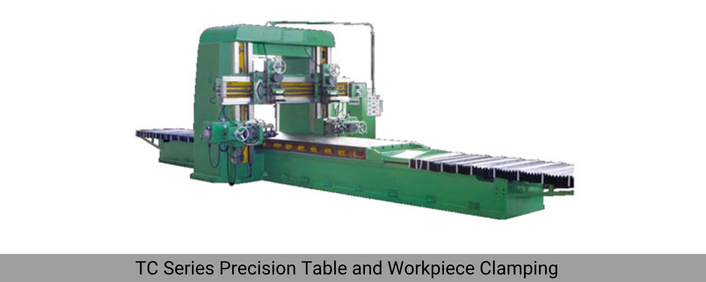
In a planing machine, the workpiece is secured to a large horizontal table using T-slots and clamps. The table reciprocates backward and forward along a precise linear path, carrying the workpiece past the cutting tool on each stroke. The cutting tool is mounted on a cross-rail that spans the width of the machine above the table and can be traversed across the rail between strokes to progressively machine the full width of the workpiece surface. Multiple tool heads can be fitted simultaneously, allowing several surfaces to be machined at the same time and significantly reducing the number of passes required to complete the component.
The table travel length, the table size, and the maximum load capacity of the planing machine together define the maximum workpiece dimensions and weight that can be handled. On the TC series planning machine from Yash Machine Tools, the BX2012A model offers a table size of 4000mm by 1120mm and a maximum table load capacity of 8,000 kilograms, while the XA7140 model extends this to a table size of 6000mm by 1400mm with a maximum load capacity of 15,000 kilograms. These specifications make the TC series planning machine suitable for machining some of the largest and heaviest components produced in Indian heavy engineering.
Features of the TC Series Planning Machine
The TC series planning machine from Yash Machine Tools is built to the highest standards of workmanship and incorporates several features that ensure accurate, reliable performance on large and complex workpieces.
The table surface is finished to a high degree of accuracy to ensure proper positioning and seating of the workpiece. T-slots are provided across the table width for secure clamping of workpieces using standard T-bolts and clamps, allowing large and irregularly shaped components to be held firmly during machining without movement or vibration.
The column is heavily constructed from quality cast iron to absorb the significant cutting forces generated during planning without deflection, ensuring that the cutting tool follows a precise path throughout the stroke. The double housing system spanning both columns provides a rigid framework for the cross-rail and tool heads, enabling multiple tool heads to be used simultaneously for parallel machining of several surfaces in a single setup.
The cross-rail is adjustable in height to accommodate workpieces of different heights, and it is manufactured to very high dimensional accuracy because the tool follows the cross-rail path during cross-feed movement. Any inaccuracy in the cross-rail would translate directly into surface inaccuracy on the finished workpiece. The automatic control panel provides a greater degree of accuracy in material removal, making the TC series planning machine suitable for high-precision applications as well as bulk material removal.
The built-in lubrication pump system manages heat buildup at the cutting zone during continuous operation, extending tool life and preventing thermal damage to the workpiece surface. The spindle motor on the BX2012A model is rated at 45 kW, rising to 55 kW on the larger XA7140, providing ample torque for productive material removal even in tough materials such as alloy steel and hardened cast iron.
 Call Now!
Industrial Applications of Planing Machines
The planing machine serves a distinctive set of applications that no other machine tool can address as effectively, particularly in heavy engineering and capital equipment manufacturing.
In the manufacture of machine tool bases and beds, the planing machine is used to produce the large, precisely flat mounting surfaces on which other machines are built. A machine tool bed that is not flat will transfer its inaccuracy to every component the machine ever produces, making the accuracy of the planing machine operation foundational to the quality of all subsequent manufacturing.
In heavy engineering workshops, planing machines are used to machine large structural frames, gear housing faces, turbine base plates, and crane girder surfaces. The ability to machine multiple faces of a large fabricated structure in a single setup, using multiple tool heads simultaneously, makes the planing machine far more productive than a milling machine for this class of work.
In maintenance and refurbishment workshops for large industrial equipment, planing machines are used to restore worn or damaged flat surfaces on machine beds, press frames, and large mechanical assemblies to their original accuracy. The TC planning machine is particularly effective in this role because it can handle workpieces of considerable size and weight that would be impossible to accommodate on any other type of machine.
In the production of identical large components in moderate quantities, the TC series planning machine’s ability to machine multiple parts in a single setup, and its automatic control for consistent accuracy, makes it a productive option for repetitive work on large prismatic components.
C Series Planing Machine
The C series planing machine is a complementary variant to the TC series, offering the same core planing capability in a configuration suited to different workpiece types and machining requirements. The C series planner machine is built on the same principles of linear relative motion between the cutting tool and the workpiece, with the same emphasis on heavy construction, accurate guideways, and robust clamping systems that characterise all planing machines designed for serious industrial use.
Gantry Machining Centres: CNC Precision for Large Components
For workshops that need CNC-controlled machining of large components combining milling, drilling, and boring in a single setup, the gantry machining centre offers a powerful solution. A gantry type machining centre uses a bridge-style gantry structure that spans a large worktable, carrying a CNC-controlled spindle head that traverses across and along the gantry to machine large workpieces with a precision and automation that a conventional planing machine cannot match. Gantry machining centres are used in aerospace, power generation, large mould and die manufacturing, and any heavy engineering application where large components require complex multi-axis CNC machining.
The vertical machining centre is a related CNC machine tool that uses a vertically oriented spindle to perform milling, drilling, and boring on prismatic components under full CNC control. Vertical machining centres are among the most productive and widely used CNC machine tools in Indian manufacturing, serving the automotive, aerospace, defence, and general engineering industries for high-volume precision component production.
Special Purpose Machines: Custom Solutions for Specific Production Needs
Beyond standard machine tool categories, many manufacturing environments require special purpose machines (SPM machines) designed and built specifically for a single production task or a family of closely related operations. An SPM machine is engineered to perform one particular sequence of operations with maximum speed, accuracy, and repeatability, eliminating the setup time and flexibility overhead of a general-purpose machine tool.
SPM heavy machines are used in high-volume automotive production, engine component manufacturing, and large-scale industrial component production where the volume of identical parts justifies the investment in a dedicated machine. Yash Machine Tools designs and supplies SPM heavy machines to customer specifications, providing custom solutions for specific production requirements that standard machine tools cannot address efficiently.
CNC Cutting Machines: Precision Cutting with Computer Numerical Control
What Is a CNC Cutting Machine?
A CNC cutting machine is a machine tool that uses computer numerical control to guide a cutting process along a programmed path with precision and repeatability that manual cutting cannot achieve. The term CNC cutting machine covers a broad range of cutting technologies including plasma cutting, oxy-fuel cutting, laser cutting, and waterjet cutting, all of which can be mounted on a CNC-controlled gantry or portable system to produce accurate cuts in sheet metal, plate, and structural sections.
CNC cutting machines are used to cut profiles, shapes, holes, and bevels in metal and other materials according to designs programmed into the control system, eliminating the variability and skill dependency of manual cutting processes and producing consistent, accurate results across every component in a production run.
Portable CNC Cutting Machines: Precision on the Move
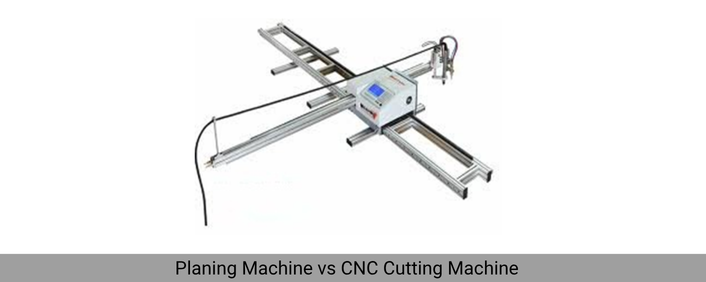
The portable CNC cutting machine brings the accuracy and repeatability of CNC control to cutting operations that must be performed in the field, on large workpieces that cannot be brought to a fixed machine, or in workshops where a full-size CNC cutting table is not available or not justified by the volume of work.
Yash Machine Tools offers portable CNC cutting machines that are custom made to suit specific industrial machining requirements. These compact cutting machines are embedded with CNC components that control the cutting path precisely, and they are manufactured from highly tensile materials to ensure durability and long-term flawless performance in demanding industrial environments. Two types of portable CNC cutters are available, developed as per customer requirements and applications.
The portable CNC cutting machine from Yash Machine Tools is particularly well suited to applications where large plate or structural sections need to be cut accurately in position, without the need to move the workpiece to a fixed cutting machine. This capability is valuable in shipbuilding and offshore fabrication, where large hull plates and structural members are cut in situ during assembly. It is also used in heavy engineering and construction, where large steel sections are cut to precise dimensions on site, and in maintenance and repair work on large structures where replacement sections need to be cut accurately to match existing geometry.
Key Benefits of CNC Cutting Machines
The primary benefit of a CNC cutting machine over manual cutting is accuracy and repeatability. A CNC cutting machine follows its programmed path precisely on every cut, producing components that are dimensionally consistent regardless of operator variability. This consistency is critical in production environments where multiple identical components must fit together accurately in assembly.
CNC cutting machines also offer significant productivity advantages over manual cutting. Once a cutting program is written and proven, the machine can execute it repeatedly without the setup time and skill requirement of manual flame cutting or plasma cutting. Complex profiles, curved cuts, and hole patterns that would be extremely difficult and time-consuming to produce manually are produced quickly and accurately by a CNC cutting machine.
The portable CNC cutting machine specifically offers the additional advantage of bringing this accuracy to the worksite rather than requiring the workpiece to come to the machine. For large, heavy, or already-installed structures, this capability is often the only practical way to achieve accurate cutting results without dismantling and transporting major components.
Applications of CNC Cutting Machines in Indian Industry
CNC cutting machines are used across a wide range of industries in India. In the shipbuilding and offshore industry, CNC cutting machines produce the hull plates, bulkheads, deck sections, and structural components that make up a ship or offshore platform, cutting complex profiles accurately from large steel plates. In the automotive industry, CNC cutting machines cut body panels, structural components, and reinforcements from sheet steel and aluminium with the precision required for consistent assembly fit. In the construction and infrastructure industry, CNC cutting machines produce the structural steel sections, connection plates, and fabricated components used in buildings, bridges, and industrial plants. In heavy engineering, CNC cutting machines cut large base plates, frames, and structural sections to precise dimensions for subsequent machining and assembly.
Choosing Between a Planing Machine and a CNC Cutting Machine
Different Machines for Different Operations
The planing machine and the CNC cutting machine address fundamentally different manufacturing operations, and in most workshop and fabrication environments they are complementary rather than competitive tools.
The planing machine is a machining tool that removes metal by cutting to produce flat surfaces of very high accuracy and fine surface finish on large, heavy workpieces. It is used when dimensional accuracy and surface quality are the primary requirements, typically in the production of machine bases, structural components, and large precision parts.
The CNC cutting machine is a cutting tool that separates material along a programmed path to produce profiles, shapes, and openings in sheet metal, plate, and sections. It is used when dimensional accuracy in the cut profile, consistent repeatability across multiple components, and the ability to produce complex shapes efficiently are the primary requirements.
A workshop that produces large fabricated structures from steel plate and sections will typically use a CNC cutting machine to cut the individual components to shape and a planing machine (or milling machine) to achieve accurate flat surfaces on critical mating faces before assembly and welding.
Key Factors in Selecting a Planing Machine
When selecting a planing machine, the most important specifications are the table size and maximum load capacity, which must comfortably accommodate the largest and heaviest workpieces you regularly handle; the maximum machining height, which determines the tallest workpieces the machine can accommodate; the spindle motor power, which determines the maximum material removal rate and the range of materials the machine can handle productively; and the feed rate range, which determines the speed at which the cutting tool traverses between strokes and the depth of cut achievable in a single pass.
Key Factors in Selecting a CNC Cutting Machine
When selecting a CNC cutting machine, the key factors are the cutting technology (plasma, oxy-fuel, laser, or waterjet), which determines the materials that can be cut, the maximum material thickness, the cut quality, and the operating cost; the cutting envelope, which determines the maximum sheet or plate size that can be processed; and for a portable CNC cutting machine, the portability, ease of setup, and the range of cutting profiles and materials the machine can handle in field conditions.
Frequently Asked Questions About Planing and CNC Cutting Machines
What is the difference between a planing machine and a milling machine?
A planing machine uses a reciprocating table that moves the workpiece backward and forward past a stationary cutting tool, and is designed for very large, heavy workpieces that cannot be accommodated on a milling machine. A milling machine rotates a multi-tooth cutting tool against a stationary or slowly traversing workpiece and is better suited to medium-sized components and complex profiles. For large, flat surfaces on very heavy workpieces, the planing machine is more practical and more productive than a milling machine.
What materials can a planing machine work on?
A planing machine can work on a wide range of metallic materials including mild steel, alloy steel, cast iron, stainless steel, and non-ferrous metals such as aluminium and copper alloys. The TC series planning machine is particularly suited to heavy ferrous materials used in machine tool manufacturing, heavy engineering, and structural fabrication.
What is a TC series planning machine?
The TC series planning machine is a heavy-duty double-housing planer manufactured by Yash Machine Tools. It is available in two models: the BX2012A with a table size of 4000mm by 1120mm and 8,000 kg load capacity, and the larger XA7140 with a table size of 6000mm by 1400mm and a load capacity of 15,000 kg. The TC series planning machine is suited to machining large machine bases, structural components, press frames, and any other large flat-surfaced workpiece in heavy industry.
What is a portable CNC cutting machine used for?
A portable CNC cutting machine is used to cut profiles, holes, shapes, and bevels in metal plate and sheet using CNC-controlled precision, at a location where a fixed CNC cutting table is not available or not practical. It is particularly useful in shipbuilding, construction, heavy engineering maintenance, and any application where large or already-installed metal structures need to be cut accurately in position.
How accurate is a CNC cutting machine compared to manual cutting?
A CNC cutting machine follows its programmed path with a high degree of precision and repeatability, producing consistent dimensional accuracy across every component in a batch. Manual cutting is subject to operator skill variability and is significantly less accurate, particularly on complex profiles, curved cuts, and hole patterns. For any application where component consistency and dimensional accuracy are important, a CNC cutting machine delivers substantially better results than manual methods.
Can a portable CNC cutting machine be customised for specific applications?
Yes, Yash Machine Tools offers portable CNC cutting machines that are custom made to suit specific industrial machining requirements. The machines are developed as per customer requests and manufactured from highly tensile materials to ensure durability and long-term performance in demanding environments.
What industries use planing machines most commonly?
Planing machines are used most commonly in heavy engineering, machine tool manufacturing, railway workshops, power generation equipment manufacturing, large pump and compressor production, and any industry that produces or maintains large, heavy components with extensive flat surfaces. They are also used in maintenance and refurbishment workshops for restoring worn machine beds and structural surfaces to their original accuracy.
Conclusion
The planing machine and the CNC cutting machine each address critical manufacturing needs that few other machine tools can serve as effectively. The TC series planning machine from Yash Machine Tools brings heavy-duty flat-surface machining capability to the largest and most demanding workpieces in Indian heavy engineering, with the structural rigidity, motor power, and precision control required to produce accurate results consistently. The portable CNC cutting machine brings computer-controlled cutting accuracy to the field, enabling precise cutting of large structures and plates in applications where fixed cutting equipment is not practical.
Together, these two machine categories extend the capability of any engineering workshop or fabrication facility into the demanding territory of large-scale precision work, supporting the growth and competitiveness of Indian manufacturing across heavy engineering, construction, shipbuilding, and capital equipment production.

Mr. Yash Shah brings extensive knowledge of workshop machinery and precision engineering to his writing, drawing on years of hands-on exposure to the machine tools industry. He writes on a broad spectrum of equipment, including Lathe Machines, Radial Drilling Machines, Milling Machines, CNC Machines, Grinding Machines, Boring Machines, Planing Machines, and other workshop machinery essential to modern manufacturing. His articles focus on practical applications, machine selection, and the role these tools play in improving shop-floor efficiency and production quality. Mr. Shah is associated with Yash Machine Tools, a trusted name in the manufacturing and supply of workshop machinery, known for delivering reliable, industry-grade solutions to clients across India and abroad.
Summarize with AI:




Listen Article:
- Welding Machines: Types, Applications and How to Choose the Right Welder for Your Workshop
- Types of Workshop Machinery: Milling, Grinding, Bandsaw and Tool Room Machines Explained
- Sheet Metal Machines: Types, Applications and How to Choose the Right One
- Drill Machine: Types of Drilling Machines and Their Industrial Applications
- Milling Machines in Modern Industry: Applications, Types and How to Choose the Right One for Your Workshop