


All Geared Lathe Machine Price Factors: What Actually Increases Cost
All Geared Lathe Machines: Price Factors and its Actual Costs
Buying a lathe isn’t just about picking a model and signing a purchase order. The price you see on a quotation sheet reflects dozens of decisions – design choices, build quality, automation features, material strength and even after-sales support. If you’ve ever compared two machines that looked similar but had a massive price gap, you’ve probably wondered: What exactly am I paying for?
When it comes to an all geared lathe machine, cost variations can be significant. Some models are priced modestly for workshop-level operations, while others carry premium tags suited for heavy engineering industries. The difference isn’t random – it’s built into the structure, components and performance capabilities.
Let’s break down what truly increases the cost and what you should evaluate before making a purchase decision.
All Geared Lathe Machine: Why Geared Systems Increase the Base Price
An all geared lathe machine differs from belt-driven versions because it uses a gearbox system for speed transmission. That may sound like a small detail, but it changes everything – from performance stability to long-term durability.
Gear-driven systems provide consistent torque at different speed levels. Instead of relying on belt tension adjustments, the machine maintains uniform power transmission. This improves precision, especially when cutting harder materials. However, incorporating a precision-engineered gearbox requires:
- High-grade alloy steel gears
- Heat-treated components
- Accurate gear alignment
- Enhanced lubrication systems
Each of these adds to manufacturing complexity and cost. Precision gears must be ground, hardened and tested for long-term performance. Poor-quality gears result in noise, vibration and premature wear – something manufacturers aim to avoid in industrial-grade equipment.
Additionally, gear housings must be robust enough to handle repeated stress cycles. That means thicker casting, stronger bearings and reinforced internal structures. These design elements increase raw material usage and machining time, which ultimately raises the selling price.
In simple terms, a geared system isn’t just a feature – it’s an investment in performance consistency. And that reliability comes at a cost.
All Geared Lathe Machines: How Build Quality Impacts Pricing
When comparing different all geared lathe machines, build quality often explains the biggest price gaps. Two machines may look similar externally, but internal construction tells a different story.
The bed, usually made from high-grade cast iron, plays a major role. Stress-relieved and precision-ground beds ensure long-term accuracy. Lower-cost versions may skip stress-relieving processes, which can cause deformation over time.
Key cost-driving elements include:
- Ribbed casting for vibration reduction
- Hardened guideways
- Precision-ground slideways
- High-quality spindle bearings
Spindle accuracy directly affects surface finish. Premium machines use precision taper roller or angular contact bearings, increasing both cost and machining capability.
Even smaller components – feed shafts, lead screws and control levers – contribute to overall pricing. When these parts are made from hardened, corrosion-resistant materials, durability improves. Naturally, higher-grade materials increase production cost.
Think of it like buying a car. Two vehicles may look identical outside, but under the hood, one may have stronger internal components built for longevity.
Read Our Article
The Growing Demand for All Geared Lathe Machines in Global MarketsAll Geared Lathes: Automation and Control Features That Raise Value
Modern all geared lathes are no longer purely manual devices. Many incorporate advanced features that influence pricing significantly.
For example:
- Digital readouts (DRO systems)
- Automatic feed controls
- Thread cutting automation
- Variable spindle speeds
- Safety interlock systems
Digital measurement systems alone can add a noticeable cost increase. However, they dramatically improve operator efficiency and reduce human error.
Automation reduces setup time and ensures repeatability. Industries that handle batch production often prioritize these features because they increase productivity.
Safety upgrades also play a role. Machines with chuck guards, emergency stop mechanisms and protective enclosures cost more – but reduce operational risks.
In 2026, many workshops demand both productivity and operator safety. These enhancements improve performance but also raise the overall machine investment.
Lathe Machine Capacity: Size and Swing Influence Price Directly
A basic lathe machine designed for small components will naturally cost less than a large industrial model. Capacity determines price in a very direct way.
Important capacity factors include:
- Swing over bed
- Distance between centers
- Spindle bore size
- Motor power rating
Larger swing capacity requires a wider and stronger bed. Longer center distance increases structural requirements. Bigger spindle bores need stronger headstock assemblies.
More material equals higher production cost. Add to that a more powerful motor and reinforced gearbox and the price climbs further. Capacity should always align with production needs. Overinvesting in a larger machine than necessary increases initial expenditure without proportional return.
Read Our Article
All Geared Radial Drilling MachinesLight Duty Lathe Machine: Entry-Level Models
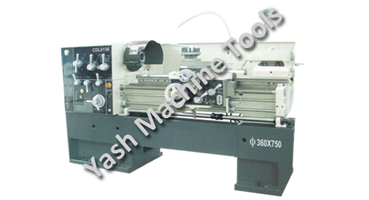
A light duty lathe machine is typically compact, easier to operate and intended for small workshops or training environments. Because it handles lighter workloads, the internal components do not need to withstand extreme torque or heavy cuts.
Cost-saving aspects include:
- Smaller motor capacity
- Compact bed design
- Simpler gear configurations
- Reduced spindle torque
These machines are ideal for small metal parts, repair work and moderate cutting applications. Since structural reinforcement requirements are lower, manufacturing costs remain manageable.
However, lighter construction means they are not suitable for heavy industrial workloads. If pushed beyond their intended capacity, wear and tear increase quickly. The lower price reflects limited load capability – not necessarily lower quality.
Medium Duty Lathe Machine: Balanced Performance and Cost
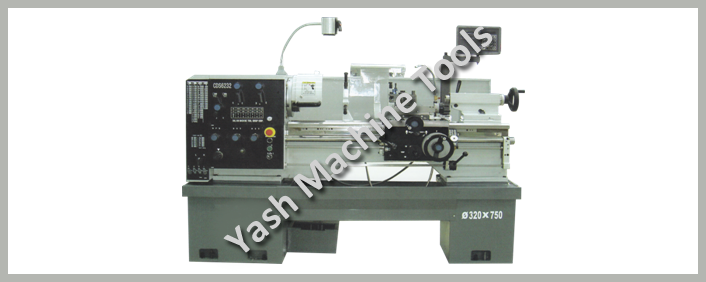
A medium duty lathe machine strikes a balance between affordability and performance. It’s built for moderate industrial operations where precision and durability are both important.
Compared to lighter variants, it includes:
- Stronger bed casting
- Improved spindle torque
- Enhanced gearbox strength
- Higher-grade bearings
These additions improve machining stability when working with harder materials. The stress-relieved structure ensures consistent accuracy over extended production cycles. While the cost is higher than entry-level machines, it offers better long-term return on investment for workshops that need reliable daily operation.
For many manufacturers, this category delivers the best balance between price and productivity.
Read Our Article
All Geared Lathe Machine: A Comprehensive Overview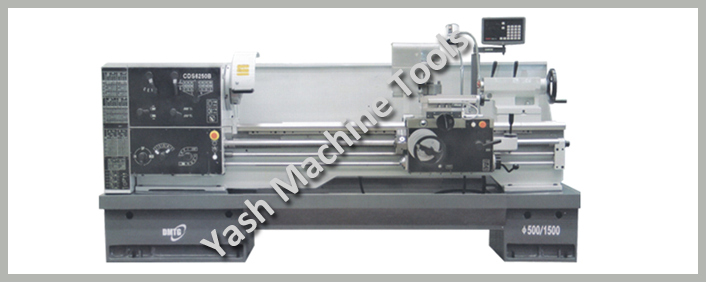
Heavy Duty Lathe Machine: What Justifies the Price Tag
A heavy duty lathe machine is designed for demanding industrial environments – mining, shipbuilding and heavy engineering workshops.
What increases its cost?
- High-capacity spindle torque
- Large spindle bore
- Reinforced headstock assembly
- Powerful motor systems
- Heavy ribbed casting
These machines must handle high tensile materials and large-diameter components without vibration. That requires substantial structural reinforcement.
Optional accessories such as coolant systems, larger chucks and electromagnetic clutches also add to the overall price.
Extra Heavy Duty Lathe Machine: Maximum Capacity Means Maximum Investment
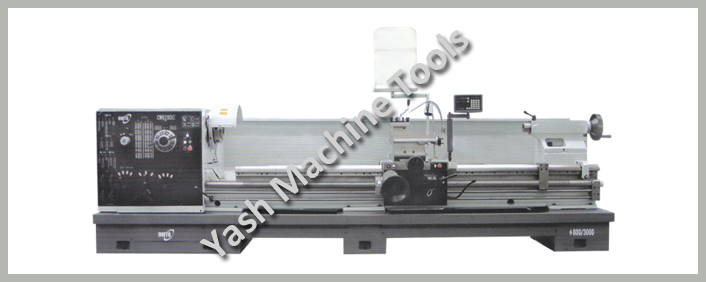
An extra heavy duty lathe represents the top tier of industrial machining solutions. These are massive machines engineered for oversized components and extreme material hardness.
Cost drivers include:
- Extremely thick bed casting
- High-speed yet high-torque spindle systems
- Advanced lubrication mechanisms
- Customizable configurations
Transport and installation costs are also higher due to machine size and weight. Manufacturing these machines requires more raw materials, longer machining hours and stricter quality control standards.
These models are typically purchased by industries that cannot compromise on capacity or structural integrity.
Medium Duty Lathe vs Heavy Duty Lathe: Price Comparison Insights
Comparing a medium duty lathe with a heavy duty lathe reveals that the price difference mainly lies in structural strength and torque capacity.
Medium-duty machines are sufficient for moderate workloads and threading tasks. Heavy-duty models handle thicker, harder materials continuously without performance degradation.
The choice depends on production volume and material type. Paying more only makes sense if the workload justifies it.
Light Duty Lathe vs Heavy Duty Lathe: Choosing Smartly
A light duty lathe machine is ideal for smaller workshops, while a heavy duty lathe machine is tailored for industrial-scale production.
The cost difference reflects:
- Motor power
- Casting weight
- Spindle strength
- Operational lifespan under heavy loads
Choosing incorrectly can either limit productivity or overspend unnecessarily.
The smartest purchase is one aligned precisely with your workload – not the biggest machine available.
Conclusion
The cost of an all geared lathe machine is shaped by multiple factors – gearbox design, build quality, capacity, automation, structural strength and service support. From light workshop models to extra heavy industrial units, each category reflects specific engineering requirements.
Understanding these price drivers helps you invest wisely. Instead of focusing only on the initial quotation, evaluate durability, workload compatibility and long-term performance.
FAQs About on All Geared Lathe Machine
Why are all geared lathe machines more expensive than belt-driven models?
They use precision gear systems that provide consistent torque and durability, increasing manufacturing cost.
Does machine size directly affect pricing?
Yes, larger swing capacity and longer bed length require more materials and stronger components.
Is a medium duty lathe machine suitable for industrial work?
Yes, it handles moderate industrial tasks efficiently but may not suit extremely heavy applications.
What makes a heavy duty lathe machine costlier?
Stronger casting, higher torque motors and reinforced internal components increase the price.
Should small workshops invest in an extra heavy duty lathe?
Only if workload demands it; otherwise, it may lead to unnecessary capital investment.
- Hydraulic Press Upgrades for 2026: How Rigid Frames & Accurate Hydraulics Reduce Waste in Sheet Metal Shaping
- Top Reasons Workshops Upgrade to CNC Swing Beam Shearing Machines
- Different Types of Lathe Machines Used in Industry: Applications in Mining, Shipping, Power Plants & Workshops
- Flat Bed CNC Lathe vs. Slant Bed CNC Lathe: Which One Is Right for Your Machining Needs?
- All Geared Radial Drilling Machines for Gulf Industries: Built for Heavy-Duty Precision


